The Operational Mistakes That Make Growing Businesses Struggle
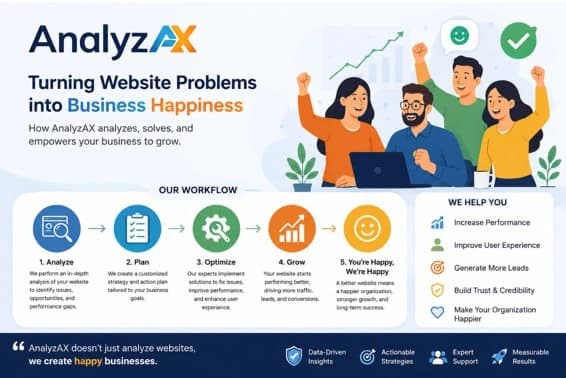
Every founder is chasing that upward graph. You want a bigger client base, higher sales volume, and better brand visibility. In the initial phase, scaling up feels phenomenal. Leads are dropping in from all channels—WhatsApp, emails, socials—and from a distance, the company looks like a massive success. But on the operational floor, this sudden surge in demand usually starts exposing systemic gaps you had no idea existed.
Before you know it, critical follow-ups start falling through the cracks. Turnaround times increase, your resources get stretched thin, and client communication becomes incredibly chaotic. The tricky part is that when you are constantly firefighting on the floor, you rarely see the actual root cause. We have this ingrained habit of equating a highly occupied team with a healthy business. But as we all know, simply keeping busy is very different from driving operational efficiency.
This forces us to step back and ask a very critical question. If your entire operation starts breaking down the moment your team reaches their full bandwidth, is that really what scaling looks like? Or are you just surviving through sheer human grit? Most modern businesses aren't scaling through systems. They're scaling through stress. And honestly, stress is a terrible long-term growth strategy.
We saw this exact scenario play out with a medium-sized business we recently analyzed at AnalyzAX. The owners were convinced their main problem was simply having too many customer inquiries to handle. Their people spent the entire day just bouncing from phone calls to WhatsApp chats, while simultaneously trying to track social media DMs. When the business was smaller, that kind of raw hustle actually got the job done. But as demand ramped up, it just became a mess. Employees were wasting hours toggling between platforms, and customers were left waiting way too long for simple answers.
Ready to accelerate your growth?
See how AI automation can streamline your workflows and increase revenue with a step-by-step strategy.
Naturally, the business owner thought the fix was to just hire more people. But what's interesting here is what we found when we dug into their operations. They didn't have a manpower shortage at all. They had a systems problem. Their entire workflow relied on a human being instantly available every minute of the day. As demand went up, the pressure on the team went up at the exact same rate. Growth itself had become the bottleneck.
It makes you wonder why we force smart, capable people to spend their days doing robotic, repetitive tasks that a system could handle automatically.
That single insight completely changed our direction. The roadblock was never the team's skill level; it was our sheer over-dependence on human intervention for the wrong tasks. When your best resources are trapped doing daily admin chores, they stop driving strategy and just become reactive. Over a period of time, the entire operation loses its agility and competitive advantage.
Therefore, instead of advising them to increase their headcount, AnalyzAX restructured their entire communication flow using AI automation. We deployed smart systems to handle the initial volume. Instead of having resources manually draft responses, the AI took over to instantly clear basic queries, block calendars for appointments, trigger reminders, and correctly route high-priority escalations to the concerned teams.
Want a tailored AI roadmap?
Create your account and get personalized recommendations based on your business goals and current setup.
The shift was night and day. The impact was obvious—client response times shrank, the team reclaimed their bandwidth, and the daily operations just started flowing better. More than anything, the business was finally in a position to scale up aggressively without having to continuously expand the payroll. They went from operating under a constant state of pressure to running on smart systems.
The big takeaway here is pretty simple. We often assume more customers automatically means we need more hands on deck. But AnalyzAX showed that more customers actually demand better systems. You don't build a lasting business just by pushing your people to their breaking point. It comes from reducing your reliance on them for things a computer can do better.
This is a huge lesson for small and medium-sized businesses. It's so common to think the answer to scaling is just working longer hours or pushing the team harder. In reality, a lot of what we call "growth challenges" are really just operational failures in disguise. When your systems are inefficient, growth just creates chaos instead of opportunity.
If your company can't grow without exhausting the people inside it, is it truly optimized for growth?
That's exactly where AnalyzAX steps in. We aren't here to replace people. We're here to strip away the repetitive operational grind that stops your people from doing their actual best work. Because the truth is, most businesses have no idea how much time, efficiency, and scalability they're losing until we show them where to look.
Written by AnalyzAX Team
AI Automation Expert
Discussion
Be the first to start the discussion.
Want to join the discussion? Log in to comment.